Mon–Fri 9:00 a.m. – 5:00 p.m. · Dallas, TX
Business Automation

Custom Business Apps & Dashboards

When standard software doesn't quite fit, Forward Konnect builds custom business apps and dashboards around your workflows. From job tracking and customer intake to real-time business reporting, we bring information from your CRM, accounting, and operational systems into one simple view. You own the solution — with full access, documentation, and ongoing support.

No obligation. Local guidance. Response within one business day.

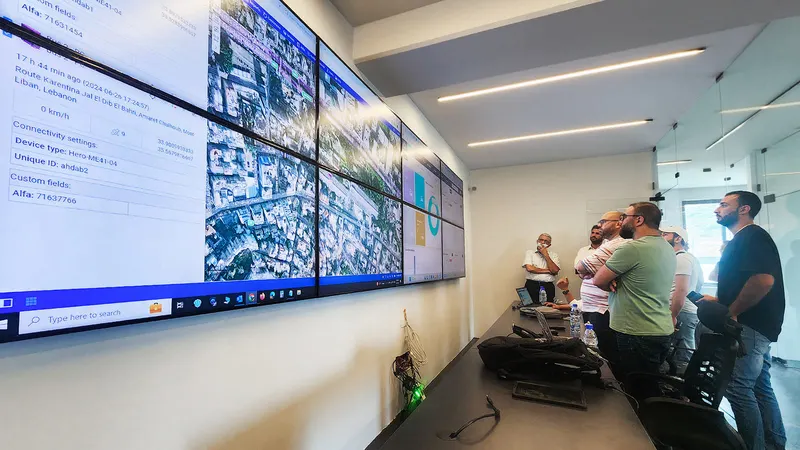
Developer reviewing a custom business application on screen
01

Who this service is for

Somewhere in your business there is probably a spreadsheet that has become far more important than it was ever meant to be — tracking jobs, commissions, inventory, dispatch or customer information.

Maybe someone also spends hours every month copying numbers from your CRM, accounting software and operations systems into a report.

These are common signs that your business has outgrown off-the-shelf software in one specific area.

Custom business apps are designed for that gap. Instead of replacing your entire technology stack, we build a focused internal tool around the process that is slowing your team down, along with business dashboards that bring important information together in one place.

One focused tool for the one process that is slowing you down.

02

Buy or build? The honest decision

Custom software is not always the right answer. Sometimes an existing platform, properly configured, will do the job better and cost less.

Our rule is simple: buy when existing software fits your process; build when your process genuinely requires something different.

Situation Better answer
A standard need — CRM, accounting, scheduling Buy; configure it properly
A product fits 90% and the gap is cosmetic Buy; adapt the process
The gap creates duplicate data entry Connect it with an integration
The process is highly specific to your business Build a focused custom tool
One spreadsheet has become critical infrastructure Build its replacement

Because we also provide CRM automation and system integrations, we have no reason to build software simply for the sake of building it. If an integration solves the problem, that is the solution we recommend — our App Integrations service covers exactly that work.

Buy when software fits. Build when your process genuinely needs it.

03

What we build

Three kinds of work cover almost every custom build we take on — and many projects combine two of them.

01

Internal tools

Small, practical applications that replace fragile spreadsheets, paper processes and manual work — job trackers, field service tools, quote builders, customer intake systems and internal workflow apps — with user accounts, data validation and a clear record of who changed what.

02

Reporting dashboards

Business reporting dashboards bring information from the systems you already use into one clear view. We can connect your CRM, accounting software, operations platform and other business systems to create dashboards for sales and pipeline, revenue and receivables, customer activity, job status, team performance, inventory, workload and capacity, and operational KPIs. Owners, sales teams and operations managers can each have a view built around the information they actually need.

03

Apps with automation inside

Custom business apps can also become the front end for business automation and AI workflows. A customer intake application can trigger an onboarding workflow. A dashboard can identify stalled opportunities. An AI workflow can extract information from documents and send it to a human review queue. The application is the visible part; the automation behind it handles the repetitive work.

In practice: a technician updates a job from a phone while the office sees the status in real time; a sales employee builds a quote from your actual pricing rules; a new customer enters their information once instead of your team re-keying it into several systems.

Dashboards are a discipline of their own — our guide to Automated Reporting Dashboards covers what belongs on such a screen and what is decoration, and the automation side is described under business automation and AI workflows.

The application is the visible part. The automation behind it does the repetitive work.
04

Who owns the result — our answer in writing

Custom software has a bad reputation when the business becomes dependent on the developer who built it. We design every project to avoid that situation.

  1. Accounts and infrastructure are yours. Hosting, databases and platform subscriptions are registered to your business from day one. We work as invited administrators rather than owners.
  2. Documentation is a deliverable, not a favor. Every application includes clear documentation explaining what it does, how the systems connect and how your team can manage it.
  3. Built on maintainable foundations. We use established, well-supported platforms and technologies wherever possible, so another qualified consultant can take over if needed.
  4. Handover is a phase, not an email. Your team receives training for daily use, your designated administrator receives deeper training, and documentation is delivered before the project is complete.

You own the accounts, the code, and the documentation — from day one.

05

Maintenance and ongoing support

Business software needs to evolve as your company changes. Your CRM may change, platforms may update, new reporting requirements may appear or your team may need additional functionality.

We offer ongoing support and maintenance for custom business apps and dashboards, including monitoring, troubleshooting, updates and smaller improvements.

Your team remains in control of the application, while we remain available when additional support or development makes sense.

Your team stays in control. We stay available.

06

Forward Konnect's role and process

  1. Discover. We review your current process — spreadsheets, reports, manual steps and workarounds — and determine whether a custom application is actually justified. Sometimes an integration or existing platform is the better answer.
  2. Design. We create the application structure, screen layouts, workflows, integrations and scope before development begins.
  3. Build and test. We develop in stages and test against your actual business processes and data to identify issues early.
  4. Train and hand over. Your team learns the application, your administrator receives additional training, and documentation is delivered.
  5. Support. Ongoing support is available for monitoring, improvements and changes as your business evolves.

Not sure whether a build would pay for itself? Our Buy-versus-Build ROI guide walks through the arithmetic honestly.

Discover first, build second — and only when a build is justified.

07

What to prepare before requesting a quote

  • The spreadsheet or manual report you want to replace
  • Who would use the application and on which devices
  • The systems containing the data your dashboard would need
  • What information you need to see or manage
  • Any previous attempt at solving the problem and why it did not work

Bring the spreadsheet as it is — that is where the design starts.

08

What happens after you submit the form

Your request reaches our team, and we reply within one business day to schedule a discovery call.

We will look at what you are trying to accomplish and determine whether custom business software, a dashboard, an integration or an existing platform is the best solution.

If custom development is not necessary, we will tell you. Smaller and simpler beats bigger and more impressive.

Book an automation discovery call

Describe the repetitive work in your business. On the call we map it step by step and show you what an automated version would look like — in plain English.

No obligation. Local guidance. Response within one business day.

Common questions

Frequently asked questions

How much does a custom business app cost?

It depends on scope, which is exactly why we do not publish figures that would mislead you in both directions. What we commit to: a written, fixed scope after discovery, phased delivery so value arrives before the end, and an honest recommendation when configuration or an integration would solve the problem for far less than a build.

What happens to our app if we stop working with Forward Konnect?

It keeps running, because it was built for that possibility. Hosting and platform accounts are in your business's name, admin access is yours, and the documentation is written so another consultant or a technical hire can take over maintenance. Independence from us is a design requirement, not an afterthought.

Can a dashboard really pull numbers from all our different systems?

Almost always, though the effort varies. Mainstream platforms — CRMs, QuickBooks-style accounting, most modern operations tools — expose their data for reporting. Older or niche systems sometimes need a scheduled export instead of a live link. Discovery includes checking each source, so the design document tells you exactly what can refresh automatically and what cannot.

Will a custom tool still work when our software changes?

Change is expected and planned for. Connections to other systems are built through their supported interfaces, which vendors maintain across updates, and the tool's own logic sits separate from those connections so a change on one side does not topple the rest. When a vendor does retire something, the support arrangement covers the adjustment.

How do updates and new features get handled after launch?

Small adjustments — new users, dropdown values, report tweaks — are things your trained admin does directly. Larger changes get scoped and quoted as short, discrete pieces of work, prioritized the same way as the original build: impact against effort. Nothing obliges you to keep spending; the tool as delivered is complete, not a subscription in disguise.

Is low-code a serious foundation for business software?

For SME internal tools, yes — modern low-code platforms are mature, widely supported and fast to adapt, which matters more than theoretical elegance when the tool serves a dozen users rather than a million. Where a requirement genuinely exceeds what low-code handles well, we say so in the design and use conventional development for that part.

Related services

Other ways we can help

App Integrations for Business

We connect the business apps you already use — CRM, email, calendar, accounting, e-commerce and phones — with one source of truth and real error handling.

Explore

Business Process Automation

Process mapping and automation for Dallas SMEs — we chart how work really moves, fix bottlenecks, and automate scheduling, onboarding and approvals.

Explore

AI Workflow Automation Services

Forward Konnect builds AI workflows that draft customer responses, summarize calls, route inquiries and extract document data — with human oversight built in.

Explore
Keep reading

From our Insights library

Tell us which tasks eat your team’s week

Describe the three most repetitive jobs in your business. We will map them and show you what an automated version looks like.