The same network equipment and configuration at every site
, so a problem at any location looks familiar, and a fix proven at one store rolls out to all of them.

Running two or ten locations should not mean two or ten separate internet setups, bills, and support relationships. Forward Konnect designs connectivity for multi-site businesses — checking what each address can actually get, engineering consistency and backup where it counts, and consolidating billing and management under one dedicated point of contact.
No obligation. Local guidance. Response within one business day.
The day a business opens its second location, its connectivity quietly changes category. What used to be "our internet" becomes a small network of sites that need to work the same way, reach each other, and fail independently without taking the company down.
Most multi-site businesses never make this shift deliberately. Each location got whatever internet was arranged the week it opened, by whoever was handling the opening, from whichever provider answered first. The result is a patchwork: different services, different capabilities, different renewal dates, different support numbers — and one owner who has become the unpaid coordinator among all of them. This service exists to replace the patchwork with a design.
Multi-site connectivity works when it is designed, not when it accumulates one opening at a time.
The first fact of multi-site connectivity is uncomfortable but unavoidable: service availability is determined address by address. Fiber build-out varies street by street, and two of your locations a few miles apart may have entirely different options — one with fiber at the curb, another where the best current choice is a different technology altogether. No amount of preference changes what has been built to a given address.
Good multi-site design starts by establishing the facts. We run availability checks for every location as a single exercise — the same verification we describe on our AT&T Business Fiber page, multiplied across your footprint — and produce a simple map of what each site can order today, what is likely coming, and where the constraints are. Only then does design make sense. Deciding "every store gets identical service" before checking is how projects stall; the workable version is "every store gets the best available service, engineered to behave consistently."
Every site gets the best available service, engineered to behave consistently.
Uniform underlying service across sites is often impossible. A uniform experience is not — it just has to be engineered at a different layer. When the connection types differ between locations, consistency comes from standardizing everything above them:
, so a problem at any location looks familiar, and a fix proven at one store rolls out to all of them.
, so staff at a branch reach the same systems as staff at headquarters without workarounds, and a new location joins the company network as a step of setup rather than a project.
Cloud-delivered phone service does not care which building answers, so calls can route across locations — one published number, answered wherever the right person is.
A sales office, a warehouse, and a storefront do not need identical capacity; they need capacity matched to headcount, cloud applications, cameras, and payment systems at that site. Sites where the connection simply cannot fail are candidates for the service-level commitments we cover under dedicated internet access.
The test of a consistent design is boring in the best way: an employee transferred between locations finds everything working the same, and a manager overseeing several sites stops thinking about which store is on which provider.
A uniform experience can be engineered even where uniform service is impossible.
Multiply locations and you multiply outage exposure — somewhere in the footprint, eventually, a line gets cut or a neighborhood loses service. The design question is not whether to add backup everywhere; it is which sites justify it. A location that processes payments all day, dispatches your fleet, or hosts systems the other sites depend on has a different tolerance than a satellite office that can limp along on phones for an afternoon.
Where backup is justified, it should be genuinely independent of the primary — a secondary connection that fails separately, typically a different technology such as wireless backup, with failover that switches automatically rather than waiting for someone to notice and start rebooting equipment. And the central-dependency case deserves special attention: if every site reaches its systems through one location, that location's outage is an everyone outage. Sometimes the right fix is backup at the hub; sometimes it is moving the dependency to the cloud so no single building is the keystone. We work through that logic site by site rather than selling redundancy by the pound.
Backup belongs at the sites that cannot go down, not everywhere by default.
The administrative side of multi-site telecom is unglamorous and expensive to ignore. Scattered accounts mean scattered renewal dates — and forgotten renewals are where telecom overspend is born. They mean invoices landing in different formats at different times, so nobody can answer "what does connectivity cost us per location?" without an archaeology session. And they mean that when a site has a problem, the person calling support first has to determine which support to call.
Consolidation fixes all three. Aligning services under coordinated accounts gets you billing you can actually read, renewal dates tracked on one calendar instead of remembered by nobody, and a single point of contact — us — for any site's issue. As an authorized AT&T dealer, we sit between your business and the carrier for the whole footprint: one call from you, and chasing the right queue becomes our job. Clients who arrive with years of accumulated patchwork often start with the account-by-account review from our broader telecom practice before the redesign.
Consolidated accounts give you readable billing, a single renewal calendar and one call to make.
Growing businesses should treat connectivity as a site-selection input, not an afterthought. Two addresses that look equivalent on a lease tour can be months apart in how quickly they can be brought online, purely because of what has been built to each. Checking service options during the property search — before anything is signed — costs nothing and occasionally saves a business from leasing its way into a connectivity problem.
A multi-site design also gives you a repeatable opening playbook: the standard equipment list, the standard configuration, the ordering lead times, and a defined sequence from lease signing to a fully connected location. Opening site number five should be a checklist executed weeks ahead, not an improvisation the weekend before launch.
Checking connectivity before a lease is signed is part of choosing the site.
We start with the footprint as it is: every location, every current service, every contract date you can find. Then availability checks across all addresses at once, a design that covers service selection, consistency, backup for the sites that warrant it, and the consolidation plan — presented in plain English with the trade-offs visible. When you approve, we manage the orders, coordinate installations around each site's working hours, and stay on as the single point of contact for the whole footprint afterward. Transitions are sequenced so no location drops its existing service before its replacement is live and tested.
No location drops its existing service before its replacement is live and tested.
The form below reaches our team directly. Send whatever you have — even just the list of addresses is enough to start the availability work. Within one business day we will come back with what we found and a proposed next step. The multi-site check costs nothing, and it is one request for the whole footprint, not a separate process per location.
Tell us where your business operates. We check current AT&T business service availability for the address and come back with real options — not a generic quote.
That is the goal of consolidation, and in most cases services can be aligned under coordinated accounts with billing you can actually compare across sites. The honest caveat: where an address can only be served by something outside the main arrangement, we integrate it into the same management and renewal calendar so it is administratively invisible — one contact and one calendar either way.
That is the normal case, not the exception, and it is a design input rather than a dealbreaker. Each site gets the best service its address supports, and consistency is engineered above the connection — standardized equipment, site-to-site networking, and phones that behave identically everywhere. We also flag sites where build-out is worth watching so upgrades happen when they become possible.
Yes — multi-site checks are run per address, and your footprint does not have to sit in one city or state. Send the full list of locations; we will verify what can be ordered at each and tell you plainly if any site falls outside what we can arrange well.
No, and paying for backup everywhere is its own kind of waste. The question per site is what an outage actually costs there: locations processing payments, dispatching crews, or hosting shared systems usually justify an independent secondary connection with automatic failover, while a site that can work around a bad afternoon may not. We make that call site by site with you, in both directions.
Check before you sign. Availability at candidate addresses can be verified during the property search, and the results occasionally separate two otherwise similar spaces — one can be brought online quickly, the other has a long build-out story. Fold the check into your site-selection process and give the winning location enough lead time for ordering and installation before opening day.
Often, yes — the redesign is not always about new circuits. Consolidating scattered accounts, aligning renewal dates, standardizing equipment, and adding backup at the critical sites all pay off without replacing every connection. The review will say which of your current services are worth keeping as-is; if the answer is most of them, the project shrinks accordingly, and we tell you so.
Get AT&T Business Fiber for your business location with help from an authorized AT&T dealer. We check availability, compare current options and manage the order.
ExploreDedicated Internet Access explained for business — how a dedicated circuit and SLA differ from shared fiber, who needs one, and how to order it.
ExploreTelecom solutions for businesses: AT&T business wireless, fiber and internet, phone systems, device procurement and a free telecom cost audit.
Explore
How to design business internet across multiple locations — per-address availability, site tiers, redundancy where it pays off, and single-owner management.
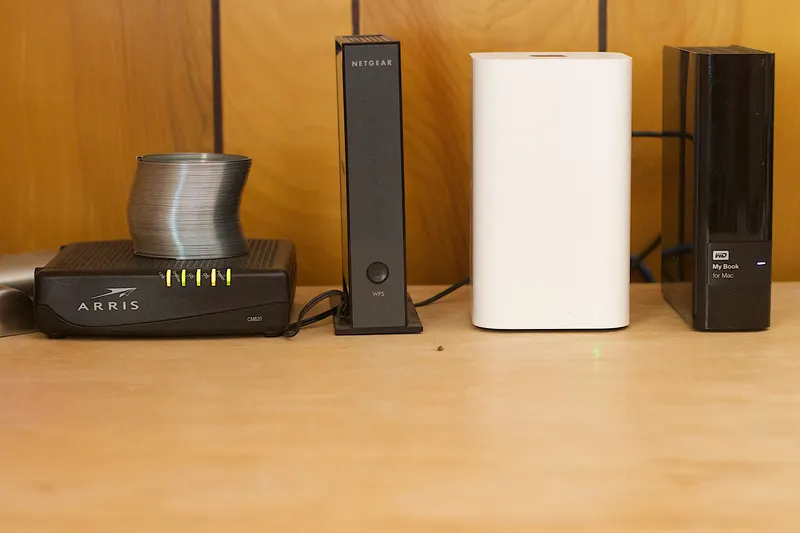
How to pair primary and backup business internet so outages never stop sales or phones — path diversity, failover hardware, sizing, testing and a runbook.
How multi-location businesses standardize internet, phones, and automated workflows across sites — a site template, rollout sequence, and governance model.
Send us your service address and we will check current availability and request the latest business options for you — no obligation.